Loading...
Serving Mill Valley, CA and surrounding areas. (628) 257-3534
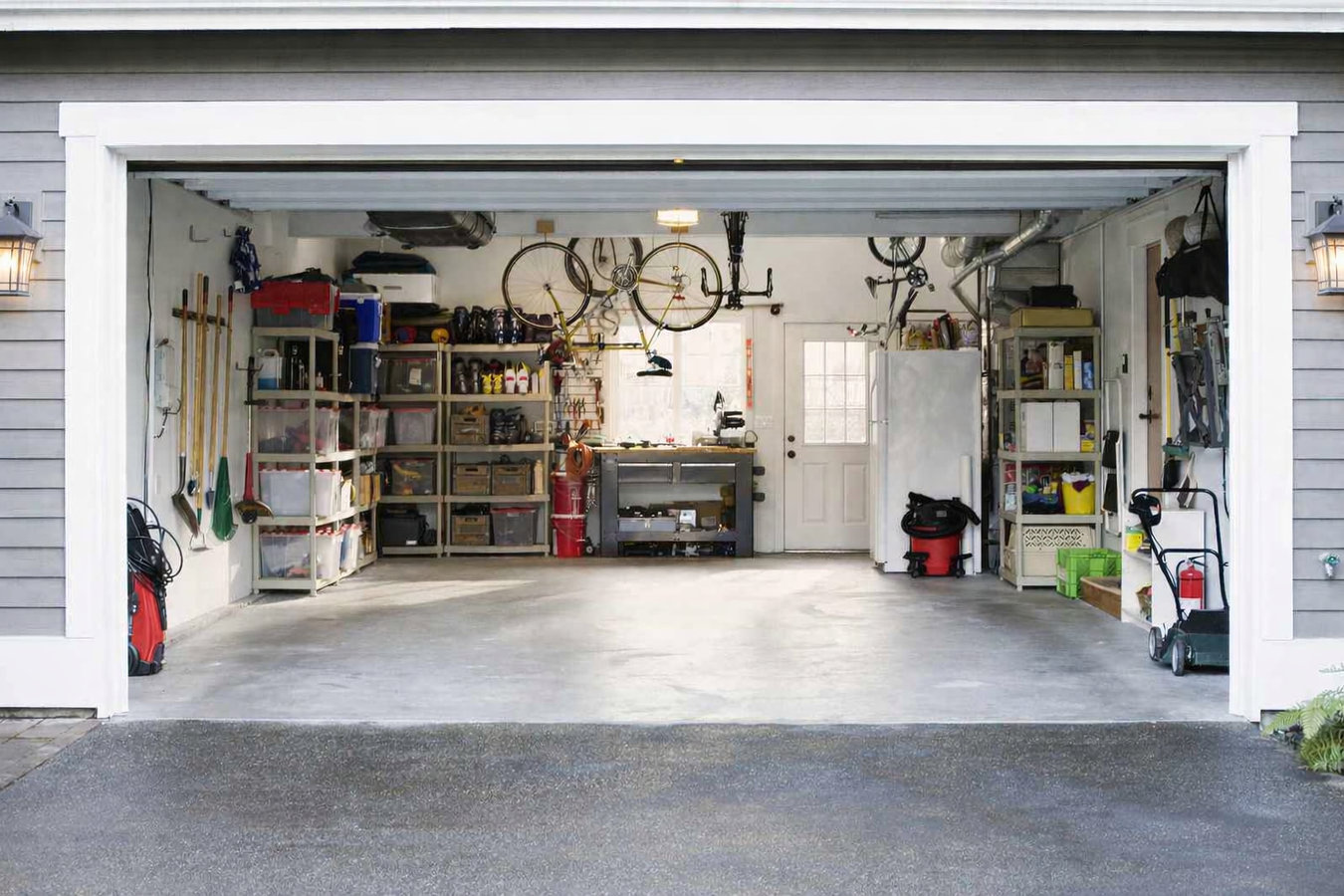
Your garage floor is cracked, spalling, or holding water. We pour reinforced concrete slabs sized and sealed for Marin hillside lots, coastal moisture, and Bay Area seismic conditions.
Garage floor concrete in Mill Valley means removing your old slab, compacting the ground underneath, pouring a reinforced concrete floor graded for drainage, and coordinating the City of Mill Valley building permit - most two-car garage projects take one to two days of active work, with vehicles off the slab for at least seven days after the pour.
The challenges specific to Mill Valley - coastal fog during curing, hillside lots with sloped garage approaches, and older housing stock with thin original slabs - all affect how the job needs to be planned. Homes built in the 1940s through 1970s, which make up a significant share of Mill Valley's housing stock, often have garage floors that were poured thin and without reinforcement. After decades of soil movement and moisture cycling, those slabs frequently need full removal rather than resurfacing. If you also need improved vehicle access outside the garage, a concrete driveway can be scoped alongside the garage floor to reduce mobilization costs.
A properly built garage floor in Mill Valley starts with the right base, includes steel mesh or rebar reinforcement, and is finished with control joints that give the slab a predictable place to relieve stress. Those details are what separate a floor that lasts 30 years from one that cracks in the first wet winter.
Small hairline cracks are normal and usually cosmetic. But if you can fit a pencil tip into a crack, or if cracks are spreading in a spiderweb pattern, the slab is failing structurally. In Mill Valley's hillside neighborhoods, soil movement from seismic activity or settling can accelerate this kind of cracking quickly.
Puddles forming in corners or along garage walls after a rainy night or a foggy morning mean your floor's drainage slope has failed. Mill Valley gets significant moisture from both winter rain and summer marine fog, so a floor that holds water will encourage mold and damage stored belongings over time.
If sweeping picks up a fine gray powder, or if the surface is visibly flaking in patches, the top layer of concrete is breaking down - a condition called spalling. Once it starts it tends to spread. It usually signals the original pour was too thin, mixed incorrectly, or never sealed against moisture.
Walk your garage floor slowly. If you feel a noticeable rise or dip, or your car rocks slightly when you pull in, the slab has shifted or settled unevenly. In older Mill Valley homes built on hillside lots, this kind of settling is common and typically means replacement rather than patching.
Every garage floor project starts with an honest assessment of what is already there. If the existing slab can be resurfaced, we will say so. If it needs to come out, we explain exactly why before we pick up a jackhammer. The scope of work - demolition, base preparation, reinforcement, pour thickness, and finish - is spelled out in writing before any work begins.
Beyond the garage itself, we can coordinate concrete floor installation for other indoor areas at the same time - combining work on one mobilization typically lowers the overall cost per square foot. The finish options below represent the most common choices for Mill Valley garages.
Best for garages with structurally compromised floors - demolition, full base prep, new pour from the ground up.
Standard finish choice - broom texture for grip near the garage door, smooth trowel where you want easy cleaning.
Suited for slabs that are cosmetically worn but structurally sound - applied over the existing concrete after surface prep.
A penetrating or film-forming sealer applied after curing - recommended for Mill Valley garages where coastal moisture is a long-term concern.
Mill Valley sits at the base of Mount Tamalpais and is regularly blanketed in marine fog from the Pacific, especially from May through September. That persistent moisture means a freshly poured slab needs careful attention during curing - concrete that dries unevenly in humid conditions can develop surface cracks within weeks. A contractor who works regularly in Marin County will manage curing schedules around the Bay Area's fog patterns, which is something an inland contractor may not think about. American Concrete Institute guidelines on curing in high-humidity environments apply directly to garage floors in this part of Marin.
The greater Bay Area sits in an active seismic zone, and Mill Valley's soils - particularly on hillside properties - can shift with ground movement. This makes reinforcement inside the slab more important than it would be in a flat inland neighborhood. A properly reinforced slab will hold together if the ground shifts slightly; an unreinforced slab from the mid-20th century may crack and separate. When we assess an older garage floor, we check specifically for reinforcement and factor that into our replacement recommendation.
We work across southern Marin, including homeowners in Sausalito and Tiburon who face the same combination of hillside lots, clay soils, and coastal moisture. We also serve Corte Madera homeowners dealing with older garage slabs in need of a full replacement.
We ask a few quick questions when you call, then schedule an in-person visit. A phone quote on a hillside garage is rarely accurate - we need to see the floor, the access, and the drainage conditions before giving you any numbers.
After the site visit you receive a written estimate covering demolition, disposal, slab thickness, finish type, and permit cost. We then file the City of Mill Valley permit on your behalf - typically a few days to a couple of weeks of processing time.
We break out and haul away the old slab, grade and compact the sub-base, install reinforcement, and set forms. This is where the long-term quality of the floor is decided. We do not rush it.
Concrete is poured, leveled, finished, and control joints are cut before the slab sets. Foot traffic is safe after 24 to 48 hours; vehicles stay off for seven days. A city inspector signs off on the work before the permit closes.
We handle the City of Mill Valley permit, the demo, and the pour. You get a written estimate after we walk the garage - no phone guessing.
(628) 257-3534We carry a valid California C-8 Concrete Contractor license and full liability insurance. You can verify both on the California Contractors State License Board website before work begins.
We have replaced garage floors on steep, access-limited Mill Valley lots since 2022. We know what Bay Area coastal conditions, clay soils, and older housing stock demand from a concrete pour.
We handle City of Mill Valley permits from application through final inspection on every project. Your slab is on record with the city, which protects you at resale and with your insurance carrier.
We visit your garage before quoting - because access challenges, drainage slopes, and existing slab conditions on hillside properties cannot be assessed over the phone.
Mill Valley garage floors present a specific set of challenges - steep lot access, coastal curing conditions, and mid-century slabs that need full replacement. We have handled every one of them on local projects since 2022. Look up any contractor's California license on the CSLB website before signing anything - it takes about two minutes.
Interior concrete floors for living areas, workshops, and ADUs - poured and finished to match your space.
Learn moreReinforced concrete driveways designed for Marin hillside lots, steep grades, and tree-root proximity.
Learn morePermit season in Marin fills up fast - call today or request an estimate online and we will schedule an on-site visit within one business day.