Loading...
Serving Mill Valley, CA and surrounding areas. (628) 257-3534
A cracked, heaving, or slippery path is more than an eyesore. It is a liability and a daily frustration. We build concrete sidewalks in Mill Valley that handle hillside terrain, tree roots, and wet winters without failing early.
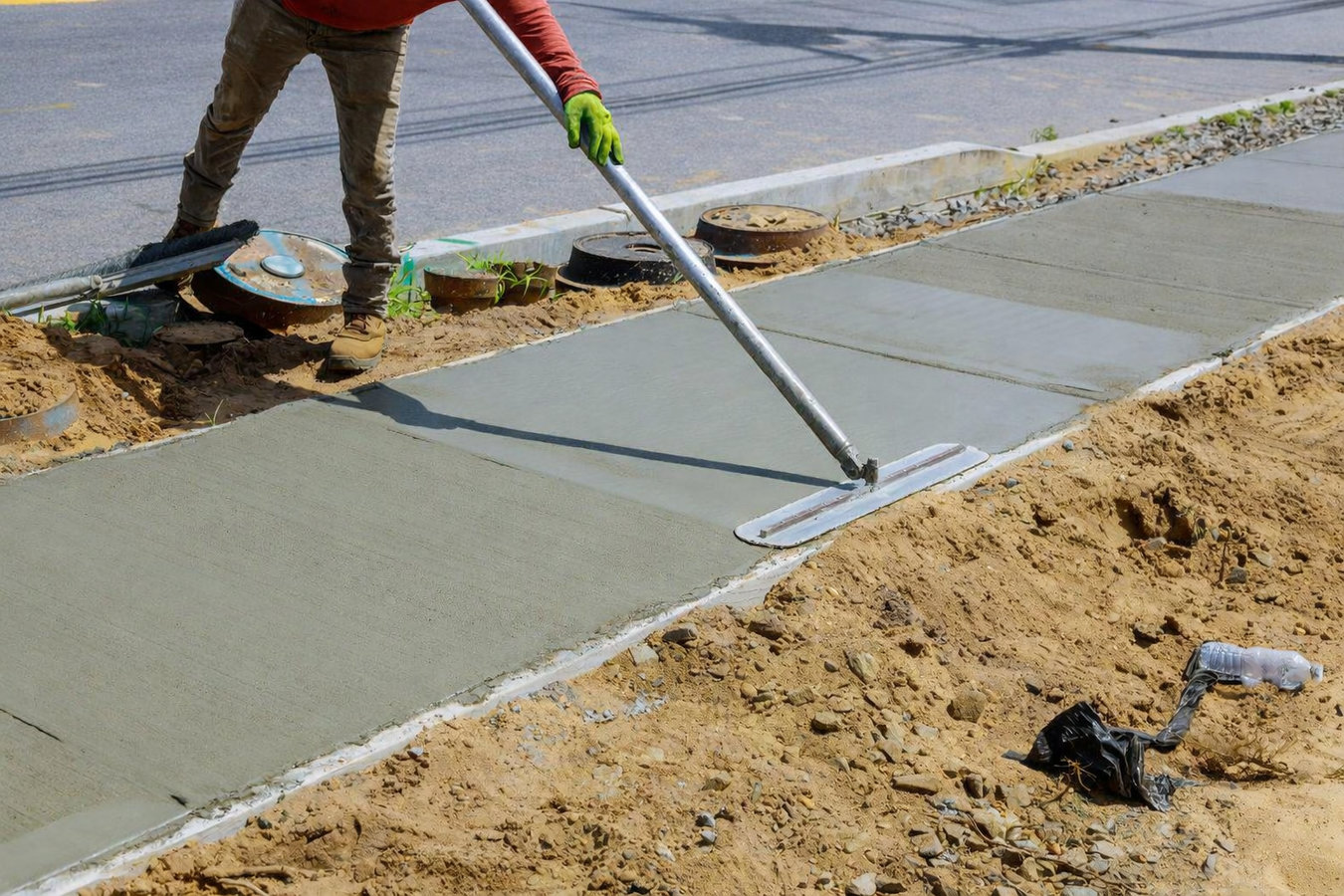
Concrete sidewalk building in Mill Valley involves removing the old surface, preparing a compacted base for Marin County's clay soils, and pouring a fresh slab with proper slope and drainage built in - most residential jobs take one to three days of active work.
If your current path is lifting, cracking, or sending water toward your foundation rather than away from it, patching usually only delays the problem. Mill Valley's hillside terrain and wet winters create conditions where a properly built base matters more than anywhere else, and a sidewalk built without it will show problems within a few years. The investment you make in a well-built path is one you should not have to repeat for 30 to 50 years.
Most sidewalk projects pair naturally with related work. Many homeowners connect their new path to an updated Concrete driveway building, while others plan the sidewalk alongside new Concrete steps construction that match the finished surface material and color.
If you can see that one section of your sidewalk sits higher or lower than the one next to it, the ground underneath has shifted. In Mill Valley, this is often caused by tree roots pushing up from below or clay soil swelling after the rainy season.
A lifted edge is also a trip hazard, which can become a liability issue if a visitor falls. Once slabs start heaving unevenly, the problem tends to get worse each wet season, not better.
Small hairline cracks are normal in older concrete, but once a crack is wide enough to catch a coin or your shoe toe, water is getting in. In Marin County's wet winters, water that enters a crack can expand on cold nights and widen the crack further.
This is an accelerating cycle. The longer you wait, the more the crack spreads, and the more expensive the eventual repair becomes. Replacement now is almost always less costly than continued patching.
If you notice puddles sitting on your sidewalk after it rains rather than draining away, the surface has either settled unevenly or was never built with enough slope to begin with. Standing water makes the path slippery and speeds up surface wear.
This is a sign the path needs to be rebuilt with proper drainage planned from the start, not just patched. A slippery, wet surface is also a real safety risk during Mill Valley's rainy months.
When the top layer of concrete starts to peel away or feels gritty underfoot, the surface has begun to deteriorate. This is common in older Mill Valley homes where the original sidewalk was poured decades ago without modern mix standards.
Once the surface starts breaking down, patching only delays the inevitable. A full replacement gives you a clean, safe surface that will last another generation and looks intentional rather than patchwork.
We build concrete sidewalks for residential properties throughout Mill Valley, from simple front entry paths to longer paths that navigate hillside grades and connect multiple areas of your property. Every project starts with a site visit where we look at the slope, check for nearby tree roots, and plan the drainage path before we do anything else. Those steps are not optional on a hillside lot in Marin County, where skipping them is the primary reason sidewalks fail early.
Our concrete sidewalk work connects naturally with other services that improve your property's entry and safety. New paths often run alongside a rebuilt Concrete driveway building so the whole front of the property has a consistent, finished look. We also coordinate sidewalk projects with new Concrete steps construction when the path needs to navigate a grade change with a stepped section rather than a continuous ramp.
We handle all permitting through the City of Mill Valley building department, including coordination with the county inspector for final sign-off. You do not need to track any of that yourself, and you will have a complete paper trail for your project when we are done. For a deeper look at concrete installation standards and what quality work looks like, the American Concrete Institute publishes homeowner-accessible resources on base preparation, curing, and what to look for in a finished surface.
Best for homeowners adding an entry path, ADU access route, or connecting two areas of the property that currently have no paved surface.
Right for older slabs that have heaved, cracked through, or deteriorated past the point where patching makes sense economically or visually.
Suited for Mill Valley's sloped lots where a simple continuous slab is not safe or practical, requiring formed steps and careful drainage planning.
For properties with mature redwood or oak trees where root assessment and barrier installation need to be part of the project plan from the start.
Two things make Mill Valley sidewalk projects more demanding than a typical flat-lot job: the terrain and the trees. The city is built into the slopes of Mount Tamalpais, and most residential lots sit on grades that require extra forming, drainage planning, and sometimes stepped sections to keep the path safe to walk on year-round. A sloped sidewalk that is not built with a proper drainage slope will collect water, become slippery during rainy season, and deteriorate faster than one that handles water correctly from day one. We plan for this at the estimate stage, not after the pour.
The tree issue is equally important. Mill Valley's mature redwood and oak canopy is one of the things that makes the city beautiful, but those trees have root systems that can lift and crack a new concrete path within a few years if not addressed. We check root proximity at every site visit and talk through your options honestly before any concrete is poured. Sometimes the right answer is a root barrier. Sometimes it is routing the path slightly differently. Occasionally it means coordinating with an arborist before we start. Whatever the situation, you will know about it before work begins.
We serve homeowners throughout southern Marin County and understand the differences between neighborhoods. Mill Valley hillside lots are our specialty, but we also work regularly in Corte Madera and Larkspur, where many of the same terrain and soil conditions apply. You can also learn more about sidewalk construction standards from the Portland Cement Association, which covers control joints, base preparation, and curing in detail.
We want to see the site in person before giving you a price. A photo or description is not enough for a hillside property in Mill Valley. During the visit, we look at the slope, check for nearby tree roots, measure the area, and ask what you want the finished path to look like. We reply within 1 business day and schedule the visit promptly.
For most sidewalk projects in Mill Valley, your contractor needs to apply for a permit from the city before any work begins. This typically takes a few business days to a couple of weeks depending on the city's current workload. We handle this process for you - if a contractor suggests skipping it, that is a red flag worth taking seriously.
The actual concrete pour is usually a one-day event. The crew sets up forms to shape the edges, lays the gravel base, and then pours and finishes the concrete. The area will be cordoned off and you should plan to use a different entry to your home for the rest of that day. You can walk on the surface lightly after 24 to 48 hours.
Keep vehicles off the path for at least a week and avoid heavy loads for about a month. The city inspector will schedule a visit to sign off on the work, which we coordinate on your behalf. We do a final walkthrough with you to confirm the surface drains correctly, the edges are clean, and the path connects smoothly to your entry points.
We respond within 1 business day. After you submit, someone from our office will call to schedule a free site visit where we check for root proximity, assess your slope, and give you a clear written estimate before any work begins. No obligation.
(628) 257-3534One of the most common calls we hear from Mill Valley homeowners is that their brand-new sidewalk is already heaving because nobody dealt with the roots underneath. We assess root proximity at every site visit and talk through your options before any concrete is poured, so you are not back to square one in three years.
Whether that means a root barrier, a route adjustment, or coordinating with an arborist, the plan is in place before we start, not discovered as a problem mid-job.
On a sloped Mill Valley lot, a sidewalk that looks flat can still send water straight toward your front door or pool in a low spot that turns slippery in the morning. We build the right grade into every path from the start, so water goes where it is supposed to go year-round.
This is a design decision made during forming, not something that can be fixed after the concrete has cured. Getting it right the first time is the only way to get it right.
Selling a home in Marin County with unpermitted work is a problem you do not want. We pull every permit required by the City of Mill Valley before work starts and close out the permit properly when it is done, so your project is on record and your home sale goes smoothly whenever that day comes.
You can verify that any contractor you hire holds a valid license through the California Contractors State License Board at no cost before signing any contract.
We have completed sidewalk projects on steep hillside lots, root-adjacent paths near mature redwood stands, and flat driveway-level connections throughout Mill Valley and the surrounding areas of southern Marin County. We know this terrain and what it demands from a sidewalk build.
Whether your home is steps from downtown near Miller Avenue, up in the older hillside neighborhoods, or out in Tam Valley closer to the highway, we have worked in your area and know what to expect before we arrive.
Mill Valley homeowners invest in their properties for the long term, and we approach every sidewalk project the same way. The base preparation, drainage planning, and root assessment we do before pouring a single yard of concrete is what separates a path that lasts 40 years from one that needs replacing in five.
Durable concrete driveways built for Mill Valley's hillside lots, with grade-specific forming and drainage that holds up through wet winters.
Learn moreStepped entries and garden paths that navigate grade changes safely, matching your sidewalk material and finish for a cohesive look.
Learn moreMill Valley contractors book out fast once dry season starts. Reach out today to lock in your site visit and get a written estimate before spring slots are gone.